He Wanted to Go There. So Why Did He React?
 Martina Luisetti ABTC-ATI, PACT-KSA, Cert. SAPT, UK Dog Training and Behaviour Charter
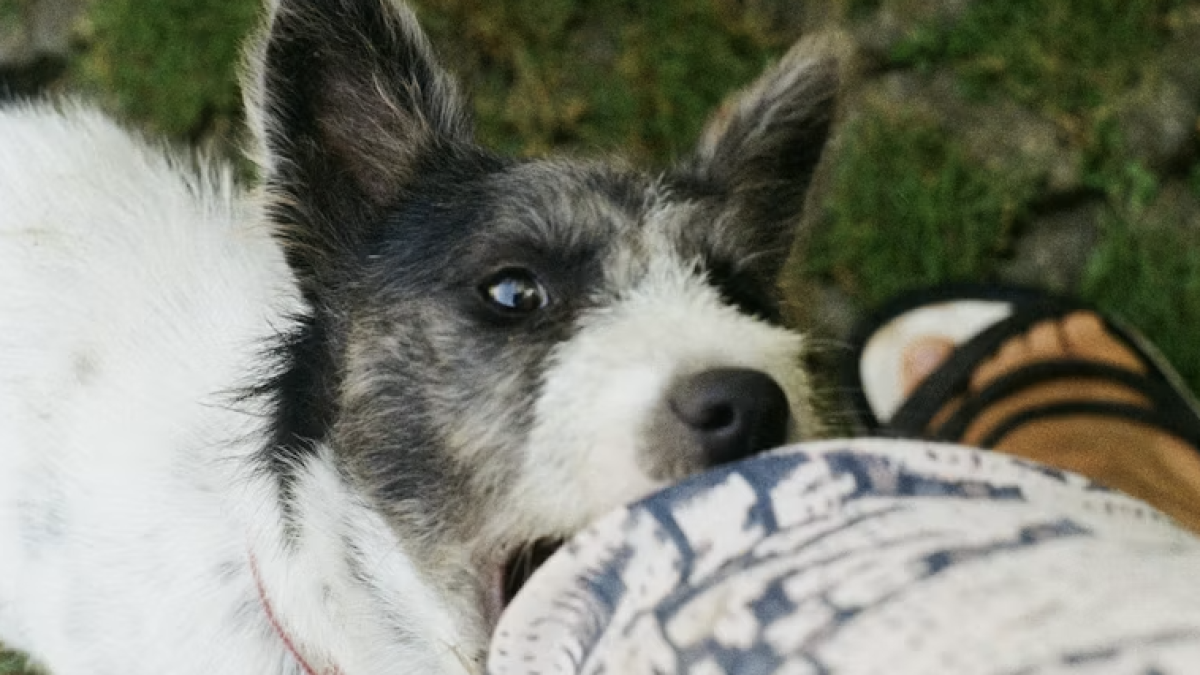
One of the most common — and heartbreaking — confusions in dog ownership: the dog who pulls toward something, then bites when he gets there.
Let me start with something personal. I'm scared of spiders. Not mildly uncomfortable — properly scared. And yet, if I catch something moving at the corner of my eye when I'm in the garden, I will turn and look. I will move closer. I need to know what it is, even though every sensible part of me would rather be inside with a cup of tea. I'm drawn toward the very thing that frightens me — and if it turns out to be a large, living spider right next to my hand, my reaction is immediate, involuntary, and nothing short of a spectacular mess.
This is exactly what your dog is doing. And once you understand that, so much changes.
The Pull Is Not an Invitation
When a dog strains toward another person, another dog, or any unfamiliar trigger, our instinct as owners is to read that pulling as enthusiasm. As friendliness. He wants to meet them — look how much he wants to go! And so we let him. We follow his lead, literally.
But it's worth pausing on what pulling actually looks like — because we tend to picture it at its most dramatic: a dog hauling us down the street, lead taut, completely out of reach. In reality, pulling begins much earlier and much more quietly than that. It starts the moment the slack leaves the lead. It starts with a nose dipping down to sniff, then lifting to look, then dipping again — sniff, glance, sniff, glance — each cycle pulling fractionally forward. It's as if the dog wants to be "vague" - in other words, he wants to check the potential trigger but doesn't want to be caught doing it. It starts gently. Almost politely. And then, almost without you noticing, your verbal cues stop landing. Your dog's name gets no response. The connection between you quietly switches off.
Trainer Grisha Stewart coined a wonderful term for this: the magnetic monster. The image has always stayed with me — the cartoon dog with spiral eyes, drawn helplessly toward something it cannot look away from, cannot disengage from, cannot reason its way out of but that it's not necessarily good for him. Once the magnetic monster has them, they are no longer fully present with you. They are somewhere else entirely, pulled by something far more compelling in that moment than anything you can offer.
But here is the uncomfortable truth: pulling toward something and being comfortable with that something are two entirely different things — and yet they can look almost identical from the end of the lead. A dog straining forward might be bursting with friendly enthusiasm. Or he might be compelled to investigate something that unsettles him, driven by a need to get close enough to gather information, to make sense of the unknown. We cannot see inside his mind. What we can see is the behaviour — and the behaviour, in both cases, looks remarkably similar. That is precisely why so many owners are caught completely off guard by what comes next.
"The curiosity pulls him in before the fear catches up. And then — the moment he's close enough to confirm — everything changes."
And then the person looks at him. Reaches down to pat him. Makes eye contact. And in that instant, the dog understands: I've been noticed. I am too close. There is no exit plan.
That is the moment of the nip. The snap. The sudden snarl that leaves everyone confused and the owner heartbroken, because — but he wanted to go there.
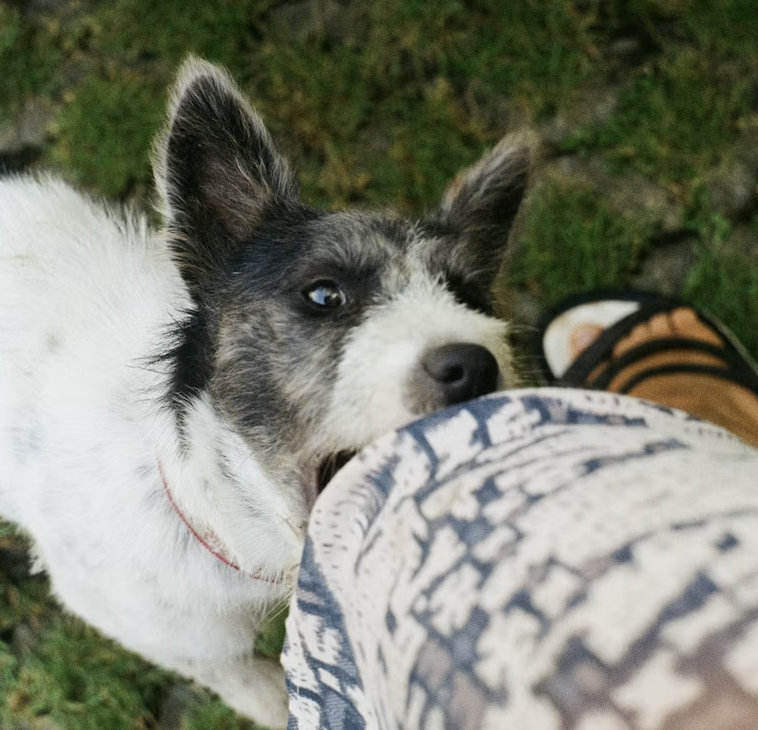
Photo by Dasha Urvachova
A Story From the Office
A real client case
A client came in recently with her dog. He was pressing his nose against the baby gate, straining toward the coworkers in the next room — tail moving, body forward, everything that looks like a dog who is desperate to say hello.
The week before, he had been off-lead in that same office. He had approached those same coworkers. He had sniffed them, circled them, seemed to be doing everything right. And then, as two of them walked past him in a narrow corridor, he nipped them both.
My client was devastated. But he wanted to be with them. He went all the way up to them himself. Why would he do that if he was scared?
Because fear doesn't always look like retreat. Sometimes — very often, in fact — fear looks like investigation. The body moves toward the thing it hasn't yet made sense of, because evolution built it that way. Approach, assess, decide. The problem is that by the time the dog reaches the decide part, he's already close enough that the options feel limited. And dogs, when they feel trapped, rarely choose flight.
Or the approach can mean something else again — not curiosity, but intention. A dog moving toward a trigger with a hard, unblinking stare and a mouth that is closed and tight is not investigating. That dog may have already made his assessment. He is communicating, as clearly as he knows how, that he would like that thing to move away. The approach, in this case, is not an invitation. It is a warning — one that is very easy to miss if we are only watching for the body moving forward and not reading how it is moving.
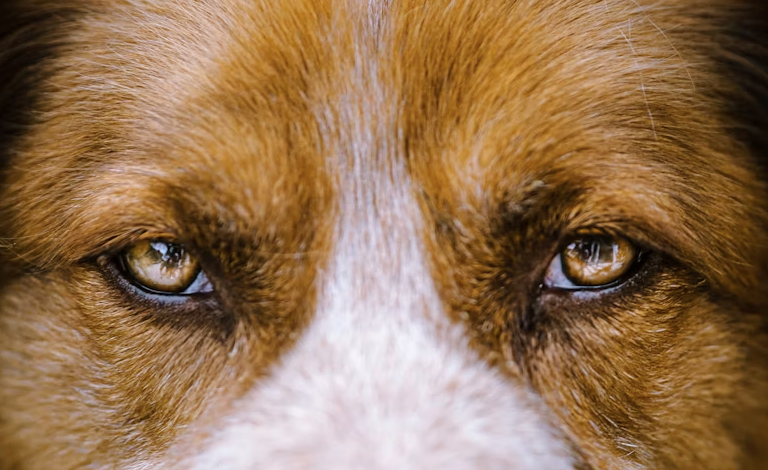
Photo cropped by a picture of Tijs Van Leur
What Relaxation Actually Looks Like
Here is something counterintuitive, and I want you to sit with it for a moment: a dog who ignores the coworkers is often more comfortable than a dog who is fixated on them. Signs like stretching, being able to turn his back to a room, taking himself to bed or to play with a toy - away from the humans - can indeed mean more relaxation.
We tend to interpret engagement as friendliness, and disinterest as rudeness or aloofness. But in the canine world, the ability to look away from a trigger is a gift. It is the dog saying: I see you, and I'm okay enough that I don't need to monitor you constantly. Of course, you want to put everything into context. If the dog has taken himself away from a crowded room but his posture is enclosed in and is staring at the corner of a room against the wall, this is a dog who is probably stressed.
A dog who rolls onto his back in the middle of the office, does a slow morning stretch, or falls asleep with his belly facing the ceiling, his mouth open and the tongue lolling? That dog is comfortable. That dog trusts the room. The dog frantically sniffing every person who walks in, pacing between the desk and the door, unable to settle for more than thirty seconds — that dog is working to gather data. He is managing. And working dogs, eventually, run out of capacity to manage (a fenomenon we call Trigger Stacking).
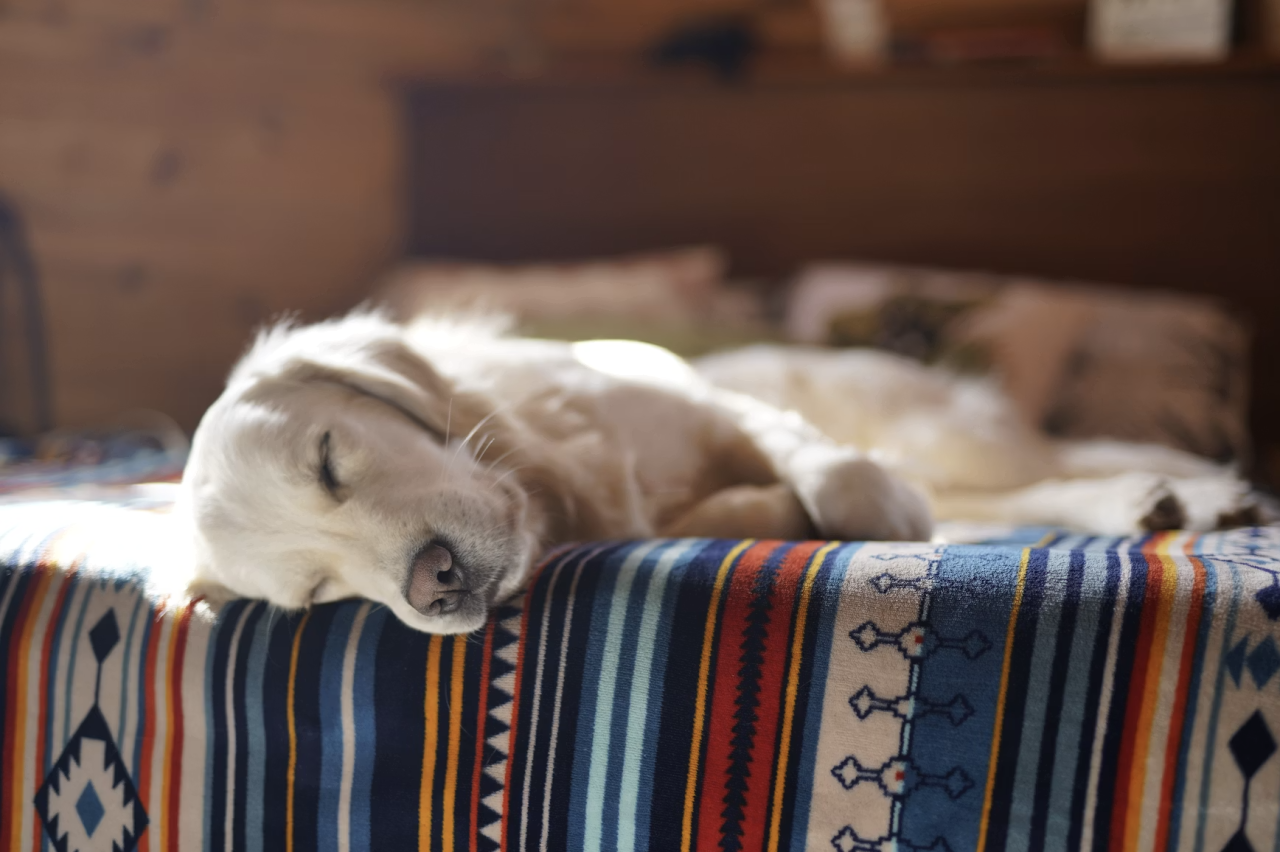
sPhoto by Irina Sofia Meli
The Economy of Movement
There is a concept I come back to again and again when helping clients read their dogs, and I call it the economy of movement. It goes like this: when a dog feels genuinely at ease, they can afford to be extravagant. Their body language is loose, soft, a little goofy. They wiggle. They bounce. They glance away mid-interaction because they're not worried that looking away will cost them anything.
But when a dog is nervous — when they feel that the environment is slightly beyond their control — every gesture becomes deliberate. Carefully chosen. They go still, or their movements become very precise. They are calibrating. Each action is selected with care because, from where they stand, the next move could matter enormously. This is an animal whose nervous system believes it might be fighting for its life. It has no budget for goofiness.
What to look for in a worried dog
The signs are often quieter than we expect. Not necessarily growling or snapping — usually something much smaller, much earlier. A body that has gone very still. Movements that have become precise and deliberate. A dog that used to be fluid and loose, suddenly careful.
Contrast this with the relaxed dog: soft eyes, a slight wiggle in the hindquarters, the ability to look away and look back without urgency. Loose. Present. Unguarded.
The difference between these two dogs is not temperament. It is context, capacity, and — crucially — how full their stress bucket already is on that particular day.
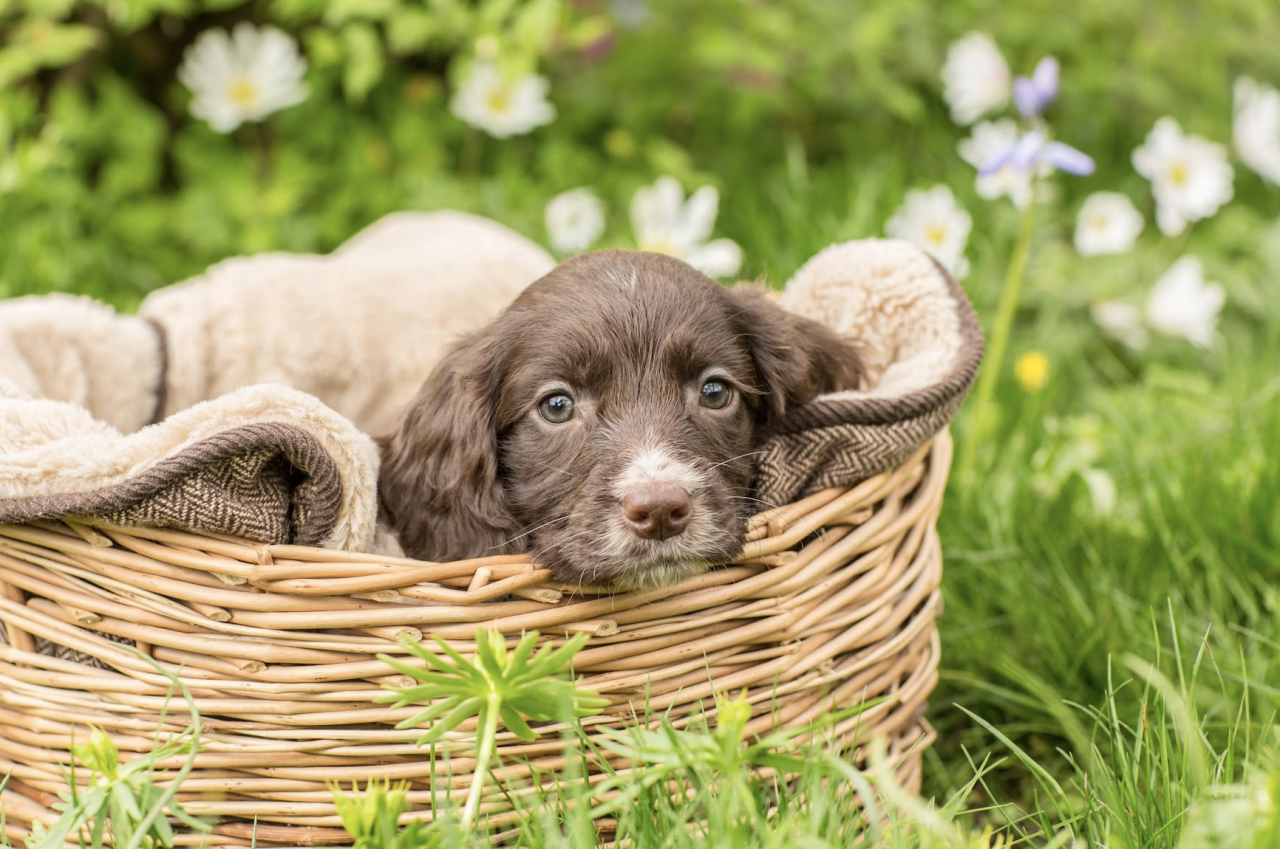
Photo by Alex Zeinet
The Stress Bucket: Understanding Trigger Stacking
Dogs don't experience stress in neat, isolated incidents. Every unsettling thing that happens — a loud lorry on the morning walk, a tense moment with another dog, being startled awake, skipping a meal, a change in routine — adds something to an invisible internal bucket. And buckets, eventually, overflow.
This is why the dog who "was fine yesterday" is not fine today. Yesterday, the bucket had room. Today, it was already three-quarters full before the postman arrived. The postman didn't cause the reaction. The postman was simply the last drop.
When we assess a dog's behaviour in any single moment, we must ask: what has this dog's day looked like so far? His week? Has he slept well, eaten well, had any frightening encounters recently? A dog at 20% capacity is a very different dog from a dog at 95% capacity — even if they look identical on the outside.
Reading the Whole Picture, Not Just the Ladder
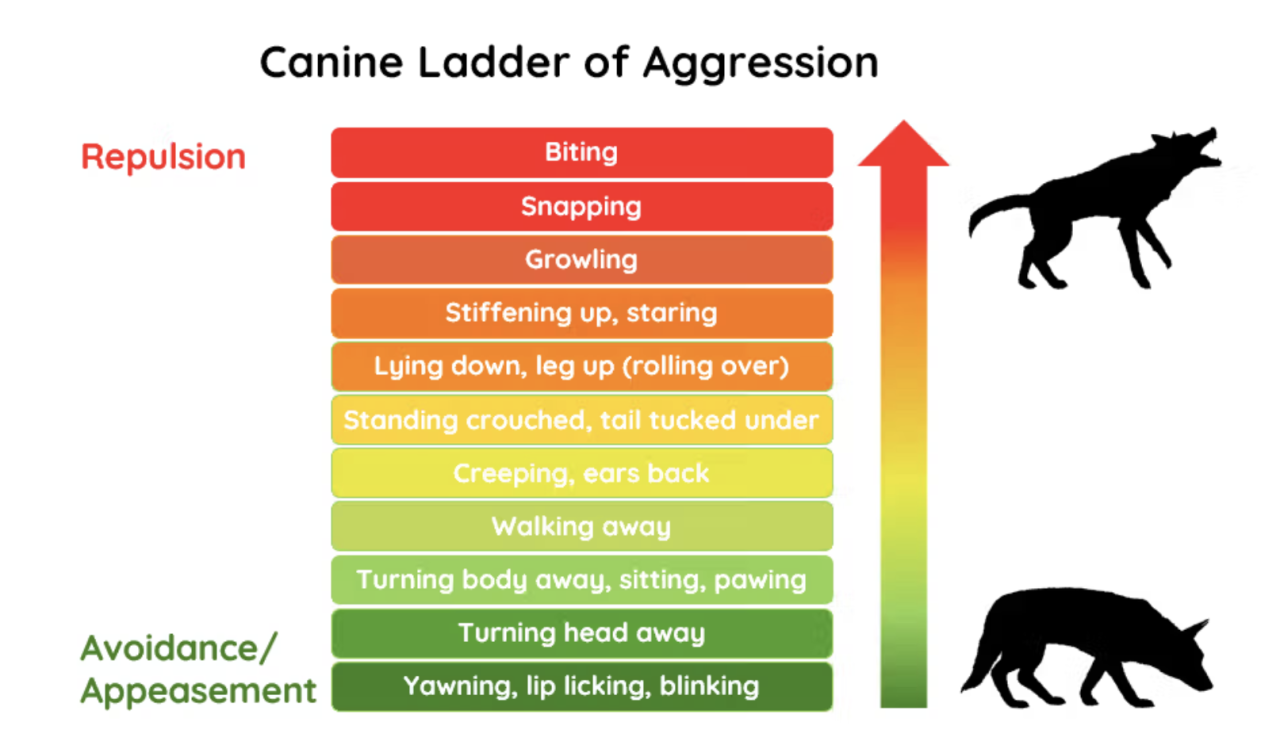
Many of you will be familiar with the Ladder of Aggression — a tool developed by Dr. Kendal Shepherd, a UK veterinary surgeon and clinical animal behaviourist, originally to help people working in veterinary settings recognise stress signals before a dog reaches the point of biting. If you don't have a copy, I would encourage every dog owner to seethis link. Print it out and stick it on the fridge. Understanding that a dog who is yawning, looking away, or showing the whites of their eyes is communicating something important — that knowledge can prevent a great deal of pain on both sides of the lead.
But I want to add something: the ladder is most powerful when paired with context. Body language signals do not exist in isolation. A dog trotting toward someone while panting, glancing away repeatedly, and making small deliberate movements is telling a different story than a dog trotting toward someone with a loose, bouncy body and a waggy tail — even if both dogs are technically "approaching."
Signs worth pausing for
- Pacing or inability to settle
- Panting not caused by heat or exercise
- Very still, very deliberate movement
- Repeated glancing away from the trigger
- Fixation — unable to disengage
- Yawning, lip-licking out of context
- Pushing toward something nervously
Signs of genuine ease
- Loose, wiggly body posture
- Able to look away and look back calmly
- Soft eyes, relaxed mouth
- Rolling, stretching, flopping down
- Sleeping in shared spaces
- Goofy, unguarded behaviour
- Choosing to disengage voluntarily
What This Means for You
If your dog pulls toward people or other dogs and then reacts when he gets there, please know this: he is not being irrational. He is not being deceptive. He is doing exactly what his nervous system is telling him to do — investigate, then respond to what he finds. The pulling was never friendliness. It was need. And the reaction was never aggression in the true sense. It was overwhelm, arriving exactly when he was most vulnerable to it.
The kindest thing we can do is learn to notice sooner. Not at the moment of the bite, but at the moment of the press against the baby gate. Not when the cup overflows, but when we can still help him find some space, some distance, some quiet — before the bucket gets any fuller.
He is not a bad dog. He is a dog who needed more help than the situation gave him. And understanding that is where everything begins.
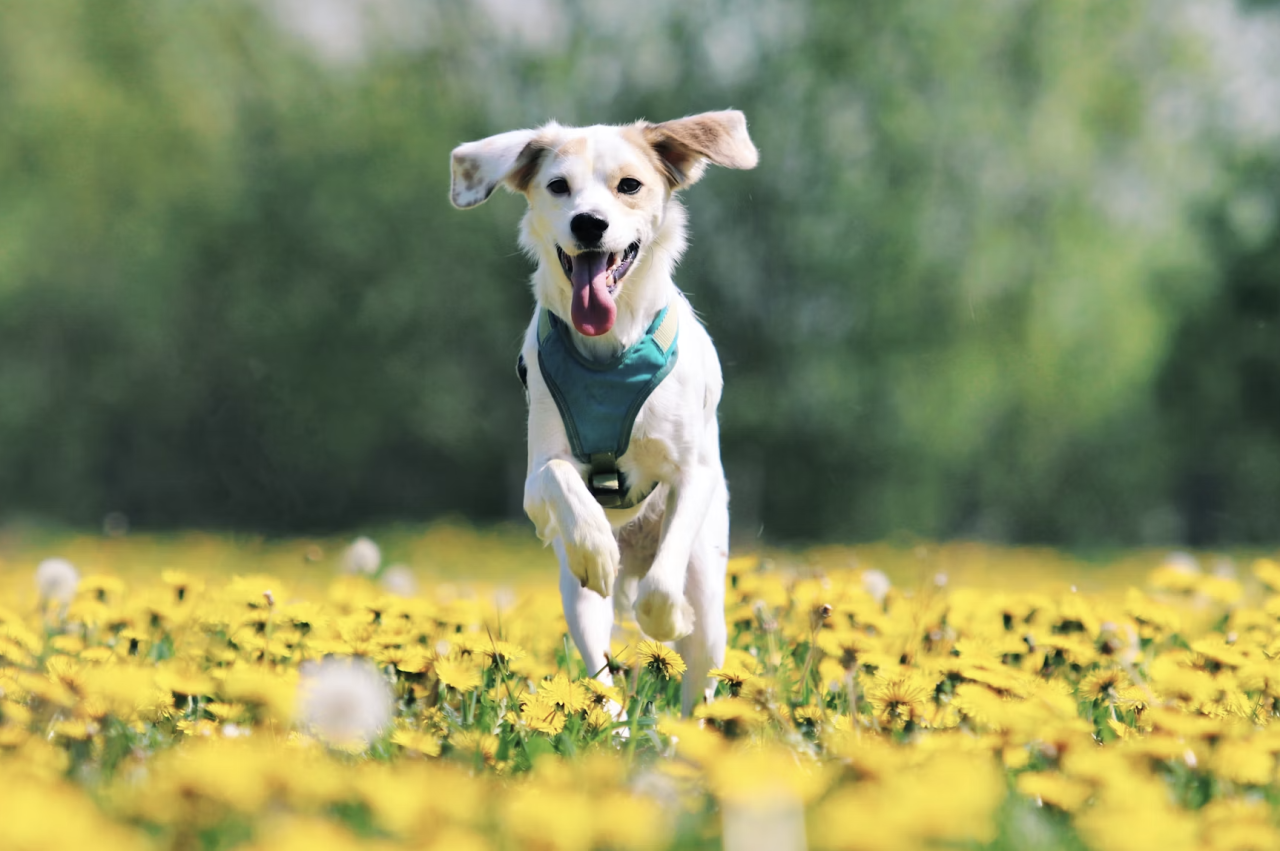
Photo by Rafaëlla Waasdorp