Why Zoom Dog Training Can Match — and Sometimes Outperform — In-Person Sessions
 Martina Luisetti ABTC-ATI, PACT-KSA, Cert. SAPT, UK Dog Training and Behaviour Charter

The assumption that dog training requires a trainer in the room is worth challenging. Here's what the evidence and experience actually show.
Why Zoom Dog Training Can Match — and Sometimes Outperform — In-Person Sessions
The assumption that dog training requires a trainer in the room is worth challenging. Here's what the evidence and experience actually show.
When virtual consultations became mainstream during the pandemic, many dog trainers expected them to be a stopgap — a temporary workaround until things returned to normal. Several years on, a growing number of professionals are keeping virtual sessions as a permanent offering, not out of convenience, but because the outcomes genuinely stack up.
The Case for Virtual Training
1. You're Training in the Real Environment
This is arguably the strongest argument for Zoom sessions. Problem behaviours — reactivity at the front door, resource guarding in the kitchen, separation anxiety — happen at home. When a trainer visits, the dog's environment is already altered by the presence of a stranger. The owner is often nervous. The dynamic shifts.
On Zoom, none of that happens. The dog is relaxed, the owner is on familiar ground, and the trainer gets to observe the behaviour in its actual context. That's valuable diagnostic information that an in-person visit can obscure.

Photo by Vitaly Gariev
2. Owner Mechanics Improve Faster
In virtual sessions, the camera is almost always on the handler — which means the trainer spends more time watching the human's timing, body language, and leash mechanics. This tends to accelerate skill transfer. Owners can't lean on the trainer to step in; they have to do it themselves, with coaching in real time. That self-reliance builds confidence and competency faster than sessions where the trainer takes over. There is a LOT MORE to conditioning than "Here is a treat, Fido"...

Photo by Ayla Verschueren
3. You Can Film Yourself and Study Your Own Work
One of the most underrated advantages of Zoom is that the session is recordable. Trainers and owners alike can go back and watch their mechanics, their timing, and their sequences in detail. In an in-person session, that moment is gone the second it passes. On Zoom, you can pause on the exact frame where your lure hand dropped too early, or where your marker came half a second late. That kind of self-review accelerates learning in a way that's simply not possible in person — and for trainers developing their own craft, it's an invaluable feedback loop.
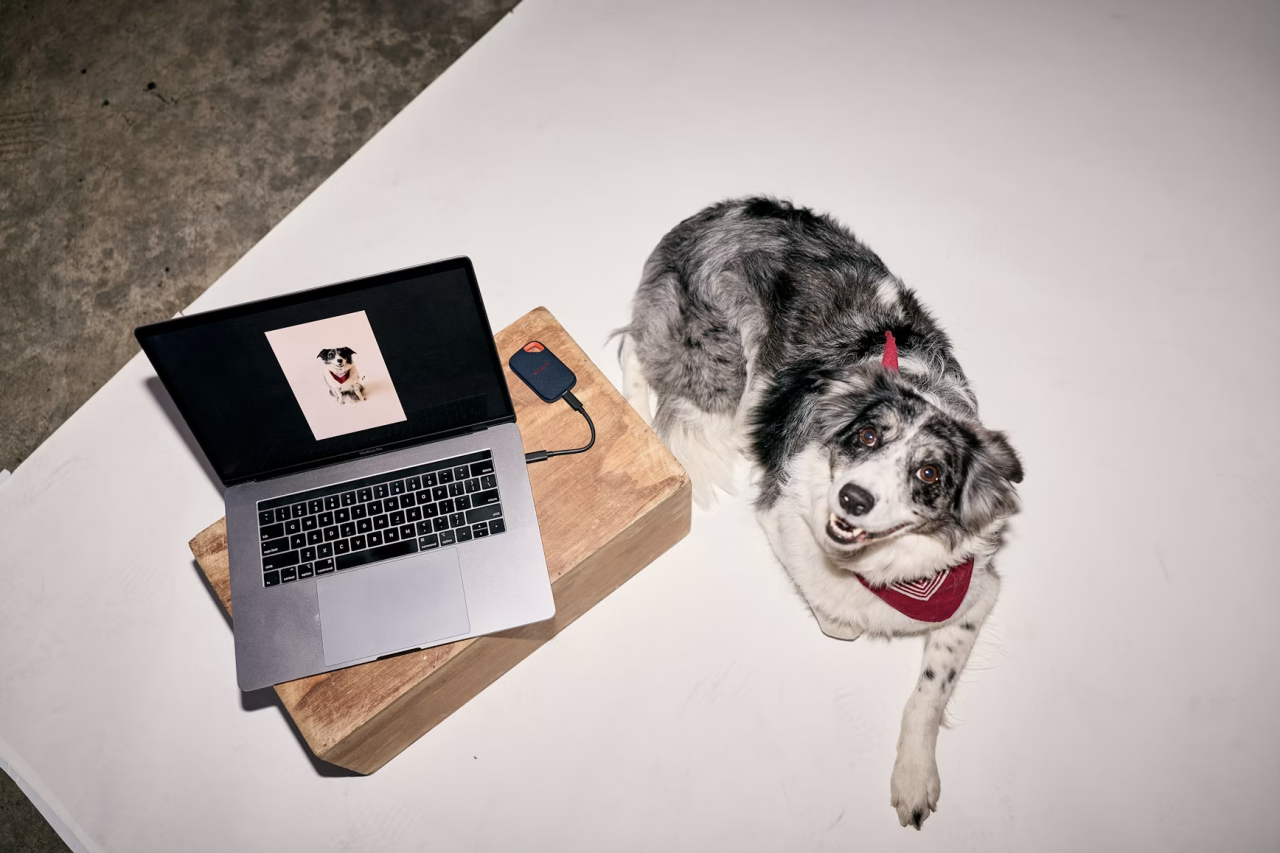
Photo by Sandisk
4. Reduced Stress for Reactive and Fearful Dogs
For dogs who struggle with strangers, or who show stress responses the moment an unfamiliar person enters the home, virtual sessions remove a significant variable. The dog never has to manage an unknown presence in their space. Sessions can proceed at the dog's actual baseline rather than a stressed version of it.
Photo by Dreametech
5. More Sessions for Less Money
Virtual training is widely known to be more cost-effective than in-person work. Without travel time, fuel costs, or the overhead of a physical visit, trainers can price sessions lower — and clients can afford to book more of them. That frequency matters enormously for training progress. Getting three or four focused Zoom sessions for the price of a single in-person visit isn't just a financial win; it's a better training outcome. Consistency and repetition are what move the needle, and virtual sessions make both far more accessible.

Photo by Karsten Winegeart
6. Consistency Across Multiple Households
When a dog splits time between homes — shared custody situations, multiple family members — virtual training allows everyone to attend the same session. Instructions aren't relayed secondhand. Everyone hears the same explanation, asks their own questions, and practices together. That consistency can be decisive for progress.
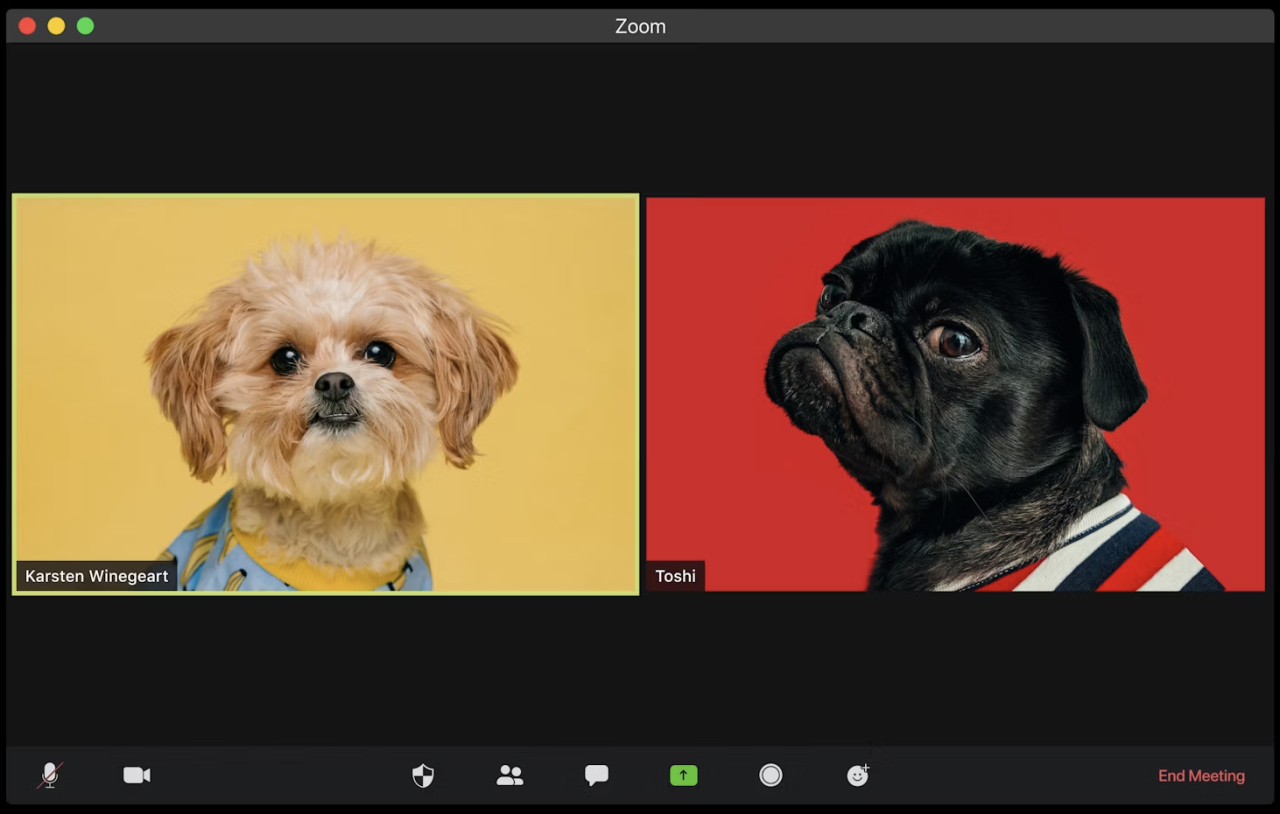
Photo by Visuals
7. Broader Access to Specialist Expertise
Geography no longer limits who an owner can work with. A client dealing with a complex anxiety case in rural Scotland can access a specialist based in London or beyond. For trainers, this expands your reach significantly and allows you to take on cases that genuinely suit your expertise rather than proximity.

Photo by Maryia Shedava
See It in Action: Paula and Levan's Hoover Session
Rather than describe what a high-quality Zoom session looks like in the abstract, here's a real example — offered here as a freebie, so you can see exactly the level of detail and coaching that's possible through a screen. You can book for one of these sessions here.
Paula came to me with Levan, her mixed breed dog, who was shutting down every time the hoover came out. A classic noise and movement sensitivity — common, very manageable, but the kind of thing that only gets worse if left unaddressed.
Levan arrived in the UK just a couple of months ago from abroad, with a past that wasn't easy. He is blind in one eye, startles readily when objects move around him, and is still finding his feet in a world that is entirely new to him. It's reasonable to assume that his limited vision plays a role — things appear suddenly, from directions he simply cannot see coming. He also has considerable Separation Related Behaviour, and his devoted partner takes him to work each day so he is never left alone. We are working there too, gradually helping him feel comfortable with movement and unfamiliar coworkers around him. Given the complexity of his history, I asked Paula to involve a Vet Behaviourist alongside our work — pain and underlying anxiety need to be properly ruled out before we interpret behaviour, and a joined-up approach is always the right one for a dog carrying this much history. Paula, it has to be said, is nothing short of gold in the support she gives him. She is head over heels in love with Levan already, and he is very lucky to have landed in a home with her.
Crucially, the hoover problem lived entirely in Paula's home. There was no neutral venue where we could have worked on it. The hoover, the specific rooms, the acoustics of that house — all of it mattered. Zoom put us exactly where we needed to be.
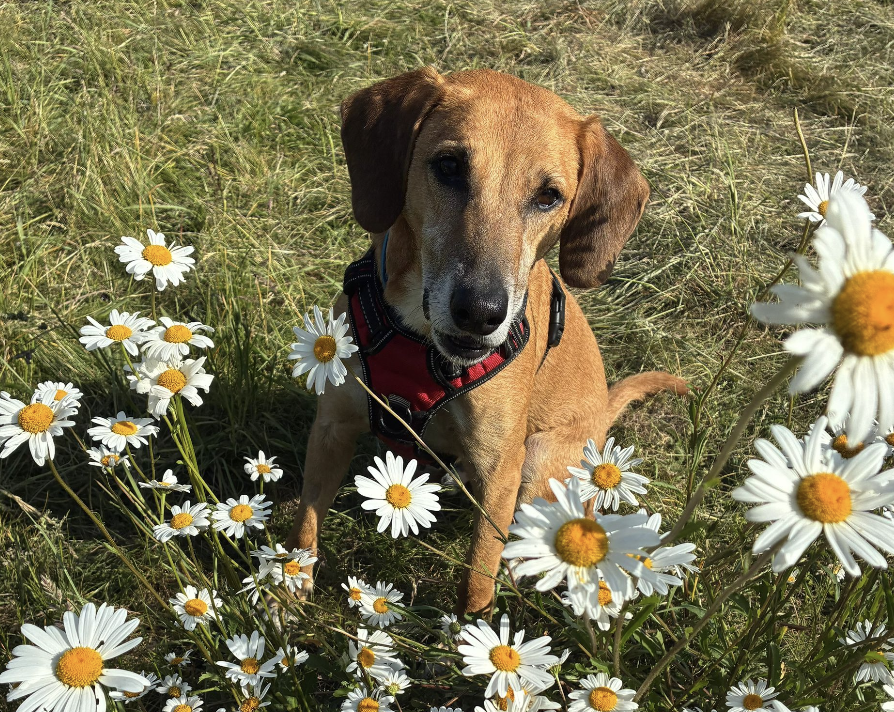
Photo of Levan by Paula
What the session covered:
From the moment we began, I was watching Levan rather than listening to a description of him. That's the trainer's eye at work — and it changes everything. Before Paula had even introduced the hoover, I could see Levan was already slightly elevated: ears soft but attention fixed, weight subtly shifted back. We hadn't started the protocol yet, and he was already telling us something. We adjusted our starting distance accordingly, keeping the hoover fully out of sight and working on building a solid positive emotional response to just the idea that something new was happening. That foundation matters enormously and is easy to skip when you're eager to make progress.
As Paula began working through the counter conditioning sequence — presenting the stimulus at low intensity and pairing it with high-value reinforcement — I was coaching her mechanics in real time. Timing feedback is immediate on Zoom: I can see her hand, I can see Levan's response, and I can call the exact moment the treat delivery was a beat too slow or her body language inadvertently tensed. One of the things I noticed early on was that Paula's hand kept drifting toward her treat pocket before she'd delivered the marker. A small thing — but Levan was reading it. Dogs learn to watch our bodies long before they learn our words, and that early movement was becoming a signal in itself. The adjustment was simple: hands outside the treat pocket until after the marker. Within a few repetitions, the clarity of the sequence improved visibly and Levan's responses became sharper and more confident.
By the end of the session, Paula was running a clean, well-timed counter conditioning protocol, Levan was eating happily at a distance where he'd previously been refusing food — a reliable indicator that his emotional state had genuinely shifted — and Paula had a clear homework plan to progress the intensity gradually across the week.
That is what a Zoom session can deliver. Not a rough approximation of in-person work — the real thing, with a trainer's full attention on your dog, your mechanics, and your specific environment.
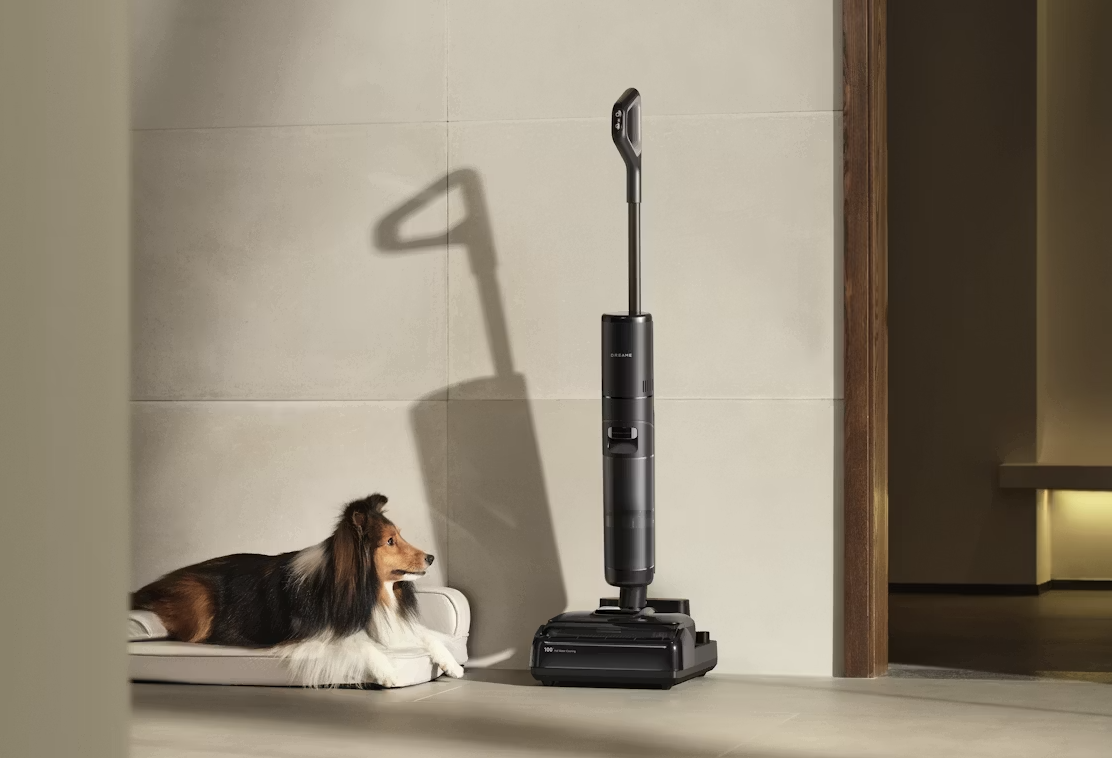
Photo by Dreametech
What Makes Virtual Sessions Work
The format only succeeds when it's set up properly. A few things that make a significant difference:
- Camera placement is everything. Ask clients to prop their phone or laptop at dog height before the session begins. Watching a dog from ceiling level tells you very little.
- Homework between sessions carries more weight. Without the physical presence of a trainer to prompt practice, written session notes and video check-ins become essential accountability tools.
- Short, frequent sessions often outperform long monthly ones. The virtual format lends itself well to 30-minute follow-ups that maintain momentum.
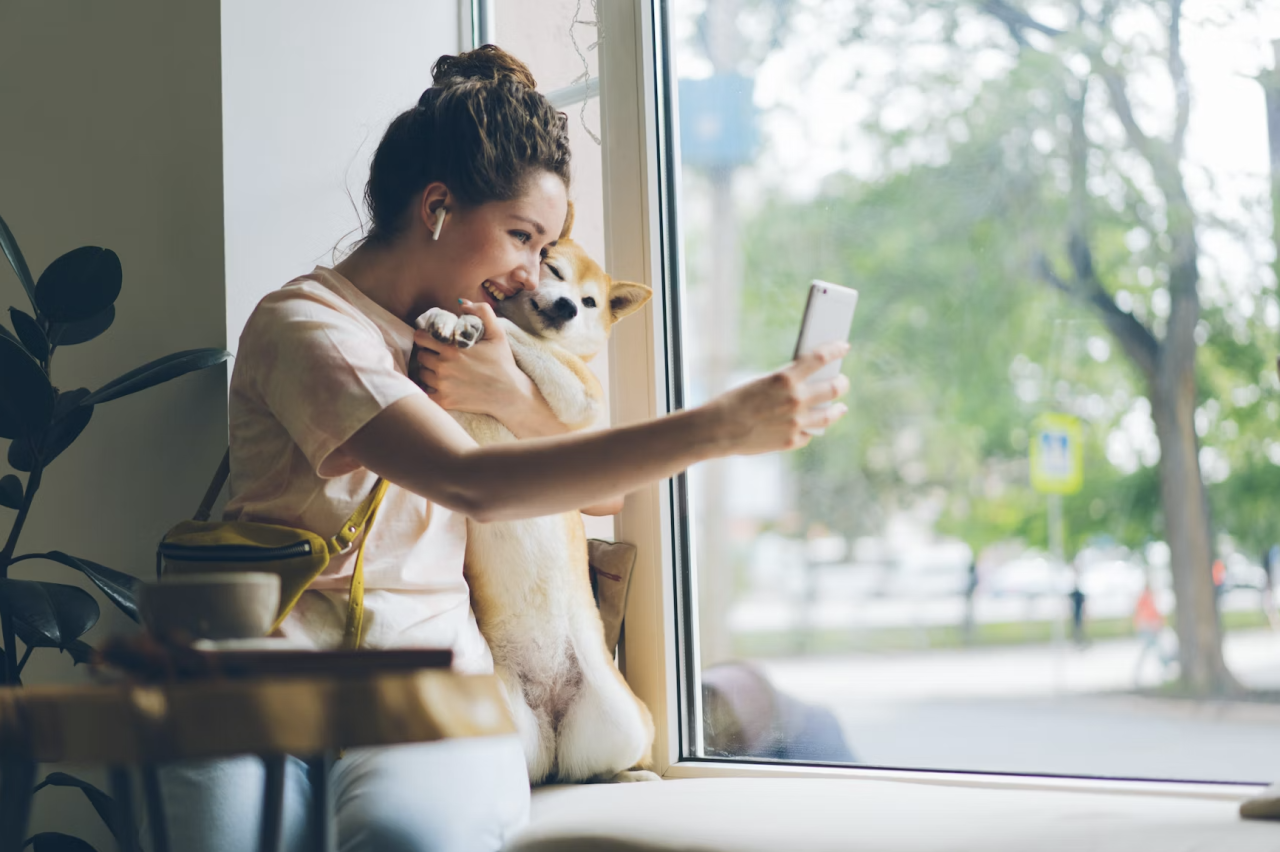
Photo by Vitaly Gariev
The Bigger Picture
The binary debate — virtual versus in-person — is probably the wrong frame. The more useful question is: which format serves this client, this dog, and this problem best?
For a reactive dog who is scared of strangers, Zoom might be ideal. For a puppy whose owner needs hands-on guidance with early foundation work, an in-person visit makes sense. Many trainers now offer hybrid packages that blend both, and clients consistently report satisfaction with that model.
What the evidence from the past few years has made clear is that virtual training, done well, is not a lesser version of in-person work. It's a different tool — and in the right situations, it's the sharper one.
Want to explore whether virtual sessions could work for you and your dog? Contact me to discuss the right format for your situation.